
Authentic Ethiopian Injera

ETHIOPIAN · MAIN · SERVES 10-12

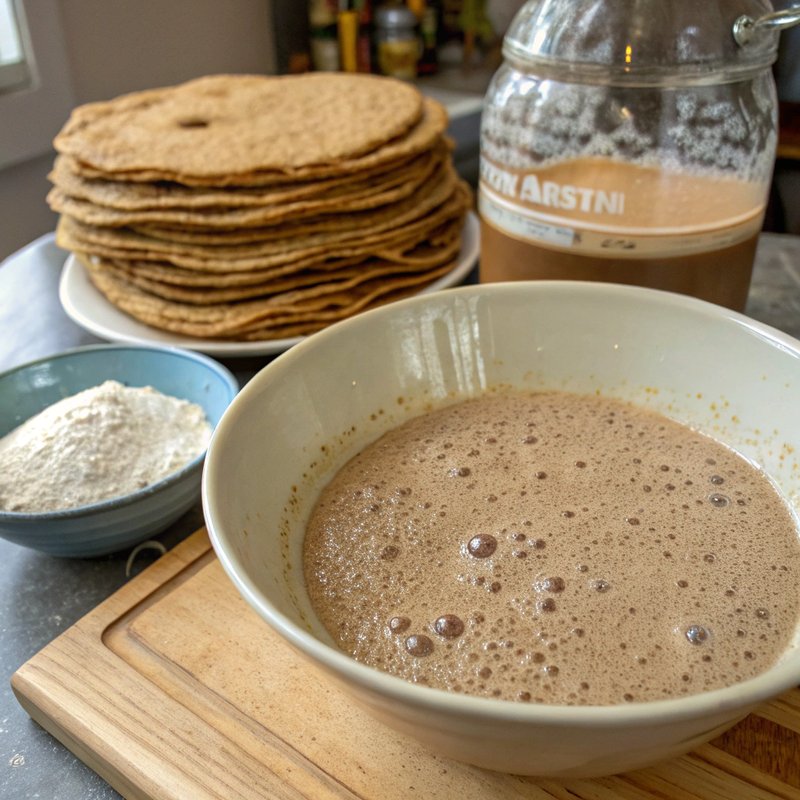
Injera, the traditional Ethiopian and Eritrean flatbread, is a must-have staple for any East African dining experience. Made from fermented teff flour - a grain indigenous to the Horn of Africa - this sourdough-risen flatbread has a unique, slightly tangy flavor and a wonderfully spongy texture that's perfect for scooping up delicious stews and sauces. The process of fermenting the batter gives Injera its distinct flavor, making it a delightful culinary adventure rich with cultural authenticity.

Now on iPhone and iPad

Cook with the Teresa's Recipes app, including a magazine-style iPad layout and guided Cook Mode.

Download on the App Store

Ingredients

Original recipe serves 10-12

Teff flour
2 cups
Water
3 cups
Salt
1 teaspoon
Vegetable oil
as needed for greasing

Instructions

  1. In a large mixing bowl, combine the teff flour and water. Stir until well combined and the batter is smooth.
  2. Cover the bowl with a clean cloth, allowing the batter to ferment at room temperature for 24-48 hours. During this time, the batter should become bubbly and acquire a slightly sour taste, which is characteristic of Injera.
  3. After the fermentation process, stir in the salt into the batter.
  4. Preheat a non-stick skillet or a traditional Ethiopian Mitad (griddle) over medium heat.
  5. Lightly grease the skillet or Mitad with vegetable oil.
  6. Pour a ladleful of the batter onto the heated surface, quickly swirling it around to form a thin, circular pancake.
  7. Let the Injera cook for about 2 minutes, or until the edges start to lift and the surface is studded with tiny holes, similar to a pancake.
  8. Gently remove the Injera from the skillet or Mitad, repeating the process until all the batter is used.
  9. Stack the cooked Injera on a plate, covering them with a clean cloth to keep them soft and pliable until serving.
  10. Serve your homemade Injera with traditional Ethiopian or Eritrean stews, salads, or any dish of your choice.

Tips

  • 💡 When fermenting the batter, make sure to keep it in a warm place to encourage fermentation.
  • 💡 The batter's consistency should be similar to crepe batter, adjust the amount of water if necessary.
  • 💡 If you're unable to find teff flour, you can substitute it with a mixture of wheat and barley flour although this will alter the taste slightly.

Dietary Information

Servings: 10-12 Dish Type: Main Prep Time: 10 minutes Cook Time: 20 minutes Fermentation Time: 24-48 hours Calories: 92 Fat: 1g Carbs: 18g Protein: 4g Sodium: 240mg Sugar: 0g

Loading side dishes...

Finding side dishes...

Loading wine pairings...

Selecting wines...

Reviews

Share Your Experience

0/1000 characters

Your Review

Want to share your experience with this recipe?

Sign in to Leave a Review

Community Reviews

Loading reviews...

Loading community reviews...

Teresa's Recipes

Authentic Ethiopian Injera

Injera, the traditional Ethiopian and Eritrean flatbread, is a must-have staple for any East African dining experience. Made from fermented teff flour - a grain indigenous to the Horn of Africa - this sourdough-risen flatbread has a unique, slightly tangy flavor and a wonderfully spongy texture that's perfect for scooping up delicious stews and sauces. The process of fermenting the batter gives Injera its distinct flavor, making it a delightful culinary adventure rich with cultural authenticity.

Serves 10-12 Prep 10 minutes Cook 20 minutes Level easy Cuisine ethiopian Main

Ingredients

  • 2 cups Teff flour
  • 3 cups Water
  • 1 teaspoon Salt
  • as needed for greasing Vegetable oil

Dietary Notes

  • Servings: 10-12
  • Dish Type: Main
  • Prep Time: 10 minutes
  • Cook Time: 20 minutes
  • Fermentation Time: 24-48 hours
  • Calories: 92
  • Fat: 1g
  • Carbs: 18g
  • Protein: 4g
  • Sodium: 240mg
  • Sugar: 0g

Instructions

  1. In a large mixing bowl, combine the teff flour and water. Stir until well combined and the batter is smooth.
  2. Cover the bowl with a clean cloth, allowing the batter to ferment at room temperature for 24-48 hours. During this time, the batter should become bubbly and acquire a slightly sour taste, which is characteristic of Injera.
  3. After the fermentation process, stir in the salt into the batter.
  4. Preheat a non-stick skillet or a traditional Ethiopian Mitad (griddle) over medium heat.
  5. Lightly grease the skillet or Mitad with vegetable oil.
  6. Pour a ladleful of the batter onto the heated surface, quickly swirling it around to form a thin, circular pancake.
  7. Let the Injera cook for about 2 minutes, or until the edges start to lift and the surface is studded with tiny holes, similar to a pancake.
  8. Gently remove the Injera from the skillet or Mitad, repeating the process until all the batter is used.
  9. Stack the cooked Injera on a plate, covering them with a clean cloth to keep them soft and pliable until serving.
  10. Serve your homemade Injera with traditional Ethiopian or Eritrean stews, salads, or any dish of your choice.

Tips

  • When fermenting the batter, make sure to keep it in a warm place to encourage fermentation.
  • The batter's consistency should be similar to crepe batter, adjust the amount of water if necessary.
  • If you're unable to find teff flour, you can substitute it with a mixture of wheat and barley flour although this will alter the taste slightly.
Keep scrolling for the next recipe in your feed
Loading next...
Loading...