


Teresa's Recipes
Budae Jjigae (Korean Army Stew)
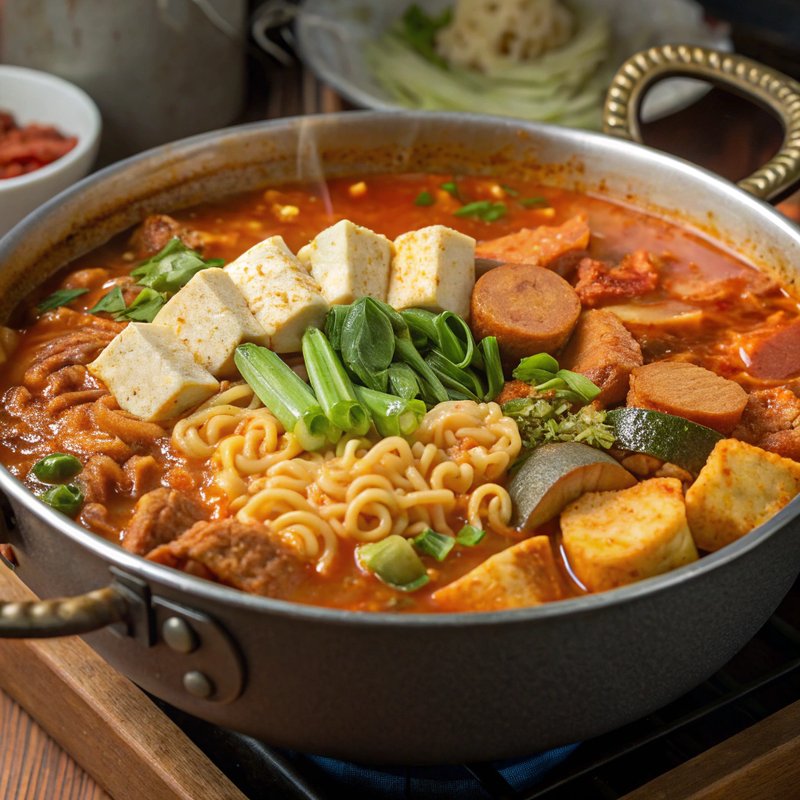
Budae Jjigae, affectionately known as Army Stew, is a hearty and comforting Korean dish that originated in the aftermath of the Korean War. This delicious stew is a fusion of traditional Korean ingredients and American military rations, including spam and sausages. It embodies a delightful mix of flavors and textures, featuring spicy gochujang, savory soy sauce, and the tang of kimchi, all simmered together to create a dish that warms the soul. Perfect for sharing with friends and family, Budae Jjigae is a must-try for anyone looking to explore Korean cuisine.
Ingredients
- 4 cups Water
- 1 tablespoon Sesame oil
- 1 teaspoon Sugar
- 2 tablespoons Soy sauce
- 2 tablespoons Gochujang (Korean red pepper paste)
- 4 cloves, minced Garlic
- 4, chopped Green onions
- 1 large, sliced Onion
- 1 block, cut into cubes Tofu
- 1 cup, chopped Kimchi
- 2 packs Instant ramen noodles
- 2, sliced Sausages
- 1 can, sliced Spam
Dietary Notes
- Servings: 4
- Dish Type: Main Course
- Prep Time: 15 minutes
- Cook Time: 20 minutes
- Calories: 450
- Fat: 25g
- Carbs: 35g
- Protein: 22g
- Sodium: 1200mg
- Sugar: 4g
Instructions
- In a large pot, heat the sesame oil over medium heat.
- Add the sliced spam and sausages to the pot, cooking until lightly browned on all sides, about 5 minutes.
- Stir in the minced garlic, sliced onion, and chopped kimchi. Sauté for an additional 3-4 minutes until fragrant.
- In a small bowl, combine the gochujang, soy sauce, sugar, and a splash of the water. Mix well and add this mixture to the pot, stirring to coat the ingredients evenly.
- Pour in the remaining water and bring the stew to a boil.
- Once boiling, add the instant ramen noodles and tofu cubes. Cook for 3-5 minutes until the noodles are tender and the tofu is heated through.
- Garnish with chopped green onions before serving.
- Serve hot and enjoy with a side of rice or additional kimchi for an authentic experience.
Tips
- Feel free to customize your Budae Jjigae by adding vegetables such as mushrooms, zucchini, or bok choy.
- For a spicier kick, add extra gochujang or some sliced fresh chili peppers.
- If you can't find gochujang, you can substitute with a mix of chili paste and a bit of sugar.