


Teresa's Recipes
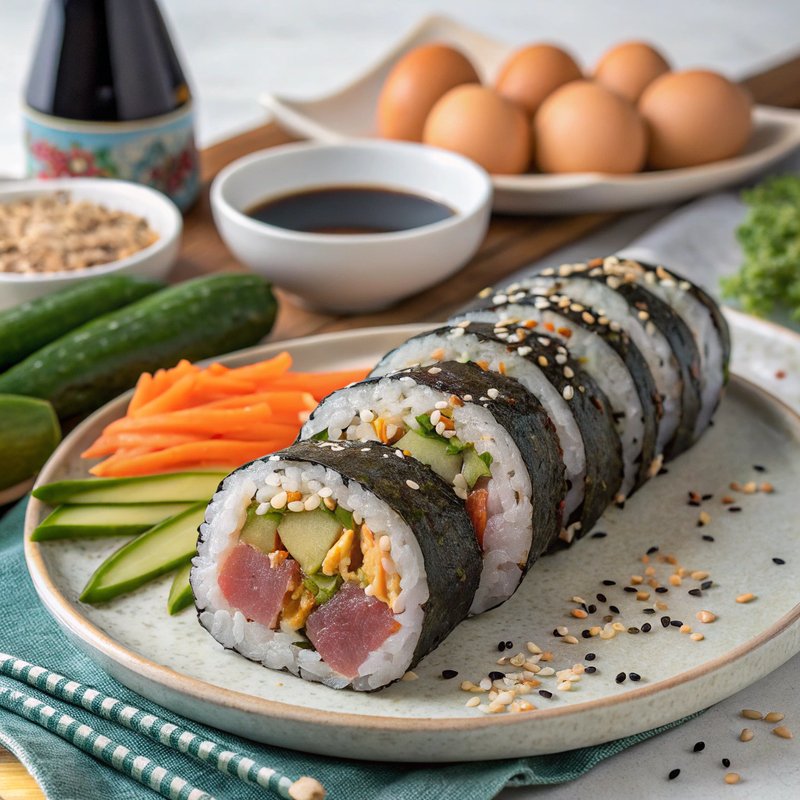
Tuna Gimbap
Tuna gimbap, a vibrant and flavorful Korean dish, is a delightful combination of seasoned sushi rice, fresh vegetables, and protein-rich tuna, all wrapped in delicate seaweed. This dish not only serves as a satisfying meal but also makes for a perfect snack or picnic food. Traditionally enjoyed by families, gimbap is often packed for outings and is a staple in Korean cuisine, symbolizing togetherness and harmony.
Ingredients
- 2 cups, uncooked Sushi rice
- 1 can (5 oz), drained Canned tuna
- 2, beaten Eggs
- 1, julienned Cucumber
- 1, julienned Carrot
- 4 sheets Seaweed sheets (nori)
- 2 tablespoons Sesame oil
- 1 tablespoon (for serving) Soy sauce
- 1 tablespoon Rice vinegar
- to taste Salt
Dietary Notes
- Servings: 4
- Dish Type: Main Course
- Prep Time: 20 minutes
- Cook Time: 10 minutes
- Calories: 320
- Fat: 10g
- Carbs: 45g
- Protein: 15g
- Sodium: 500mg
- Sugar: 2g
Instructions
- Rinse the sushi rice under cold water until the water runs clear. Cook according to package instructions and let it cool slightly.
- In a bowl, combine the cooked sushi rice with sesame oil, rice vinegar, and salt. Mix well to evenly season the rice.
- In a non-stick skillet, heat a small amount of oil over medium heat. Pour in the beaten eggs and cook until set, then flip and cook briefly on the other side. Remove from heat and slice the omelette into thin strips.
- Place a sheet of nori on a bamboo sushi mat or a clean kitchen towel, shiny side down.
- Spread a thin, even layer of seasoned rice over the nori, leaving about a 1-inch border at the top.
- Arrange a line of tuna, carrot, cucumber, and omelette strips across the center of the rice.
- Using the sushi mat or towel, start rolling the gimbap tightly from the bottom, applying gentle pressure to keep it compact. Roll it up to the edge of the nori without rice.
- Moisten the top border of the nori with a little water to seal the roll.
- Repeat the process with the remaining seaweed sheets and ingredients.
- Using a sharp knife, slice the rolled gimbap into bite-sized pieces, wiping the knife with a damp cloth between cuts for clean edges.
- Serve the tuna gimbap with soy sauce on the side for dipping.
Tips
- Feel free to customize your gimbap with other fillings such as pickled radish, avocado, or spinach.
- For added flavor, consider mixing a bit of gochujang (Korean chili paste) with the soy sauce for a spicy kick.