


Teresa's Recipes
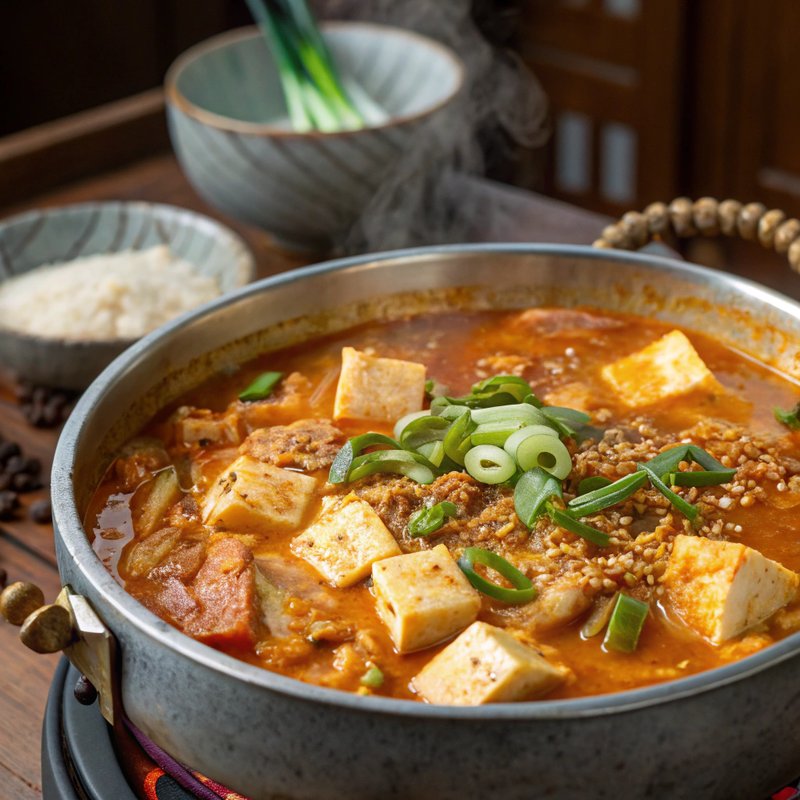
Kongbiji Jjigae - Creamy Korean Soybean Stew
Journey to the heart of Korea with this traditional Kongbiji Jjigae, a creamy and flavorful stew made from ground soybeans. This hearty dish combines the tender, savory notes of pork belly with the unique tang of kimchi and the richness of tofu. Enhanced by a hint of spice from gochujang, a popular Korean red pepper paste, and a finishing touch of toasted sesame seeds, this stew is a symphony of distinct flavors that will transport your taste buds to the lively streets of Seoul.
Ingredients
- 1 tablespoon, toasted for garnish Sesame seeds
- 2, chopped for garnish Green onions
- to taste Salt
- 2 tablespoons Soy sauce
- 1 tablespoon Sesame oil
- 2 tablespoons Gochujang (Korean red pepper paste)
- 3 cloves, minced Garlic
- 1 cup, diced Tofu
- 1 cup, chopped Kimchi
- 200 grams, sliced thinly Pork belly
- 4 cups Water
- 1 cup, soaked overnight and drained Soybeans
Dietary Notes
- Servings: 4
- Dish Type: Main Course
- Prep Time: 15 minutes
- Cook Time: 35 minutes
- Calories: 400
- Fat: 28g
- Carbs: 15g
- Protein: 25g
- Sodium: 600mg
- Sugar: 3g
Instructions
- Blend the drained soybeans with 2 cups of water in a blender or food processor until smooth, then set aside.
- In a large pot, cook the sliced pork belly over medium heat until it turns a golden brown. This should take around 5 minutes.
- Add the minced garlic to the pot and sauté for another minute until it becomes aromatic.
- Stir in the blended soybeans, chopped kimchi, diced tofu, gochujang, sesame oil, and soy sauce, then pour in the remaining 2 cups of water.
- Increase the heat and bring the stew to a boil. Once boiling, reduce the heat and let it simmer for 20 minutes. Stir occasionally to prevent the stew from sticking to the pot.
- Taste the stew and season with salt as necessary.
- Serve the stew hot, garnished with chopped green onions and toasted sesame seeds. This dish pairs perfectly with a side of steamed rice.
Tips
- For a vegetarian version of this recipe, simply omit the pork belly and use vegetable stock instead of water for added flavor.
- You can adjust the amount of gochujang according to your taste if you prefer a milder or spicier stew.