


Teresa's Recipes
Traditional Homemade Sauerkraut
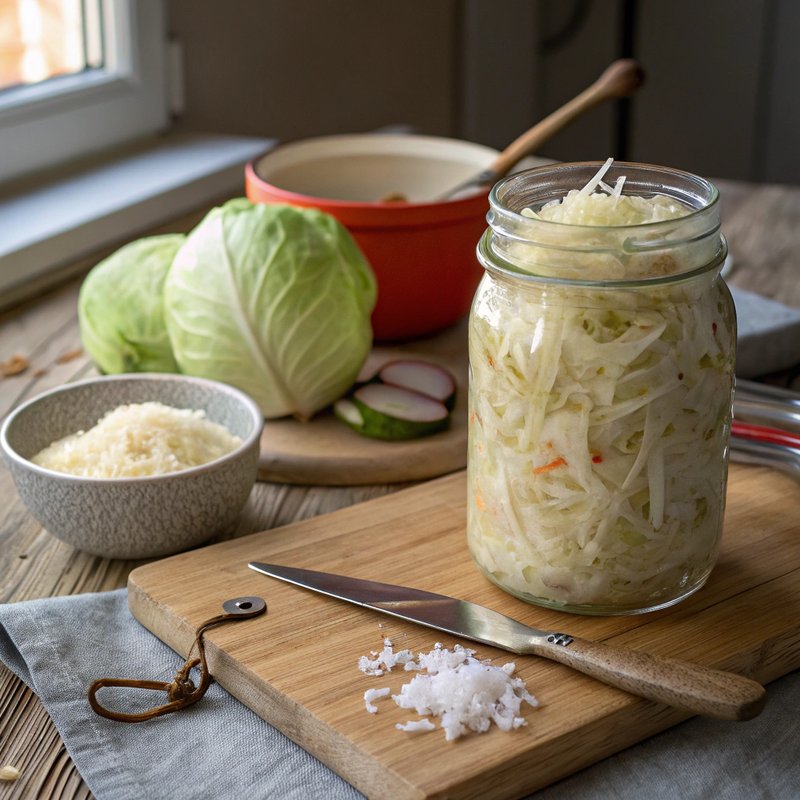
Experience the savory tang of this traditional homemade sauerkraut recipe. A staple in German cuisine, sauerkraut is packed with probiotics, making it not just tasty, but also a healthy addition to your diet. Its unique sour flavor is a result of the fermentation process, a method used extensively in ancient food preservation. Enjoy it as a side dish, or use it to elevate the flavors of your burgers, sausages, and sandwiches.
Ingredients
- 1 medium head Cabbage
- 1.5 tablespoons (preferably sea salt or pickling salt) Salt
Dietary Notes
- Servings: 10
- Dish Type: Side
- Prep Time: 30 minutes
- Fermentation Time: 1-3 weeks
- Calories: 27
- Fat: 0g
- Carbs: 6g
- Protein: 1g
- Sodium: 468mg
- Sugar: 3g
Instructions
- Remove and set aside the outer leaves of the cabbage.
- Quarter the cabbage and remove the core. Slice each quarter into thin, shred-like strips.
- Transfer the shredded cabbage into a large mixing bowl. Evenly sprinkle the salt over the cabbage.
- Massage the salt into the cabbage for about 10 minutes, or until it starts to release liquid.
- Firmly pack the cabbage into a clean glass jar, ensuring that the liquid from the cabbage rises above it. Leave about an inch of space at the top of the jar.
- Place one of the reserved outer leaves over the sliced cabbage in the jar. This helps keep the shredded cabbage submerged in its juice during the fermentation stage.
- Seal the jar with a lid, but not too tightly. The gases produced during fermentation need to escape. If using a canning jar, you can loosely screw on the lid, or for other types, cover it with a cloth and secure with a rubber band.
- Store the jar at room temperature, away from direct sunlight, for 1 to 3 weeks. Begin tasting the sauerkraut after a week. Once it has achieved the tanginess you prefer, move the jar to the refrigerator. The sauerkraut will continue to ferment slowly in the fridge, but at a significantly slower pace.
Tips
- For best results, use a type of salt that is free of iodine and anti-caking agents, which can inhibit fermentation.
- If the cabbage is not producing enough liquid, create a brine of 1 teaspoon of salt to 1 cup of water and add it to the jar.
- During fermentation, you might see bubbles or foam, or hear hissing sounds from the jar. These are all normal signs of healthy fermentation.