


Teresa's Recipes
Gimbap
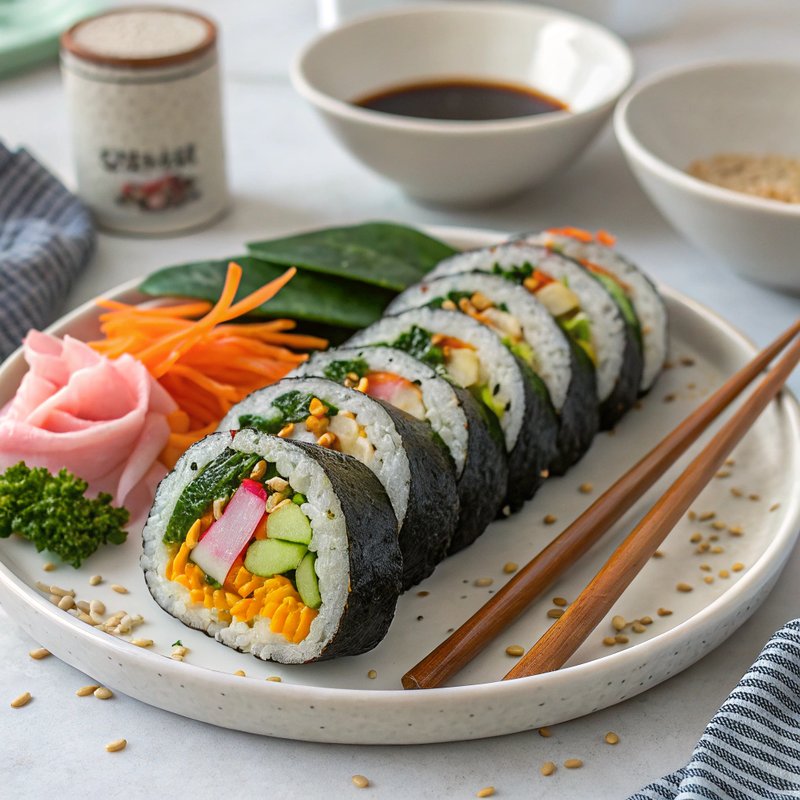
Gimbap, often referred to as Korean sushi, is a vibrant and delightful dish that encapsulates the essence of Korean culinary tradition. This beloved staple is a feast for the eyes and the palate, featuring perfectly seasoned sushi rice enveloped in crisp seaweed, layered with fresh vegetables, savory ham, and a hint of tangy pickled radish. Each bite is a harmonious blend of flavors and textures, making it a perfect choice for picnics, lunchboxes, or an elegant dinner. Gimbap not only celebrates the beauty of seasonal ingredients but also carries a rich history, having evolved from the Japanese sushi tradition, yet it has become a unique and cherished dish in Korean cuisine. Enjoy this delightful meal on its own or with a side of kimchi for an authentic experience.
Ingredients
- 2 cups Sushi rice
- 2 1/2 cups Water
- 2 tablespoons Soy sauce
- 2 tablespoons, plus more for brushing Sesame oil
- 1/2 cup, julienned Pickled radish
- 1 cup, sliced into strips Ham
- 3, beaten Eggs
- 1 cup, blanched and squeezed dry Spinach
- 1 medium, julienned Cucumber
- 1 medium, julienned Carrots
- 4 sheets (nori) Seaweed sheets
Dietary Notes
- Servings: 4
- Dish Type: Main Course
- Prep Time: 30 minutes
- Cook Time: 20 minutes
- Calories: 450
- Fat: 15g
- Carbs: 65g
- Protein: 15g
- Sodium: 700mg
- Sugar: 3g
Instructions
- Rinse the sushi rice under cold water until the water runs clear. Cook the rice according to package instructions, using 2 1/2 cups of water. Once cooked, allow it to cool to room temperature.
- In a small bowl, mix the soy sauce with 1 tablespoon of sesame oil and set aside for dipping.
- In a non-stick skillet, make a thin omelette with the beaten eggs. Cook over medium heat until set, then let it cool before slicing it into long strips.
- Blanch the spinach in boiling water for 30 seconds, then immediately transfer it to an ice bath. Squeeze out excess water and set aside.
- Place a sheet of seaweed on a bamboo sushi mat with the shiny side facing down.
- Spread a thin layer of sushi rice evenly over the seaweed, leaving a 1-inch border at the top.
- Arrange the julienned carrots, cucumber, spinach, omelette strips, ham, and pickled radish in a line across the rice.
- Using the bamboo mat, roll the gimbap tightly from the bottom, applying gentle pressure to secure the fillings. Seal the edge of the seaweed with a little water.
- Brush the outside of the rolled gimbap with sesame oil for a shiny appearance.
- Slice the gimbap into bite-sized pieces using a sharp knife, cleaning the knife between cuts for clean edges.
- Serve the gimbap with the soy sauce mixture for dipping.
Tips
- For a vegetarian version, replace ham with sliced tofu or additional vegetables such as bell peppers and mushrooms.
- Feel free to experiment with fillings like crab sticks, avocado, or pickled vegetables according to your taste.
- If you prefer a spicy kick, consider adding gochujang (Korean chili paste) to the soy sauce mixture for dipping.